

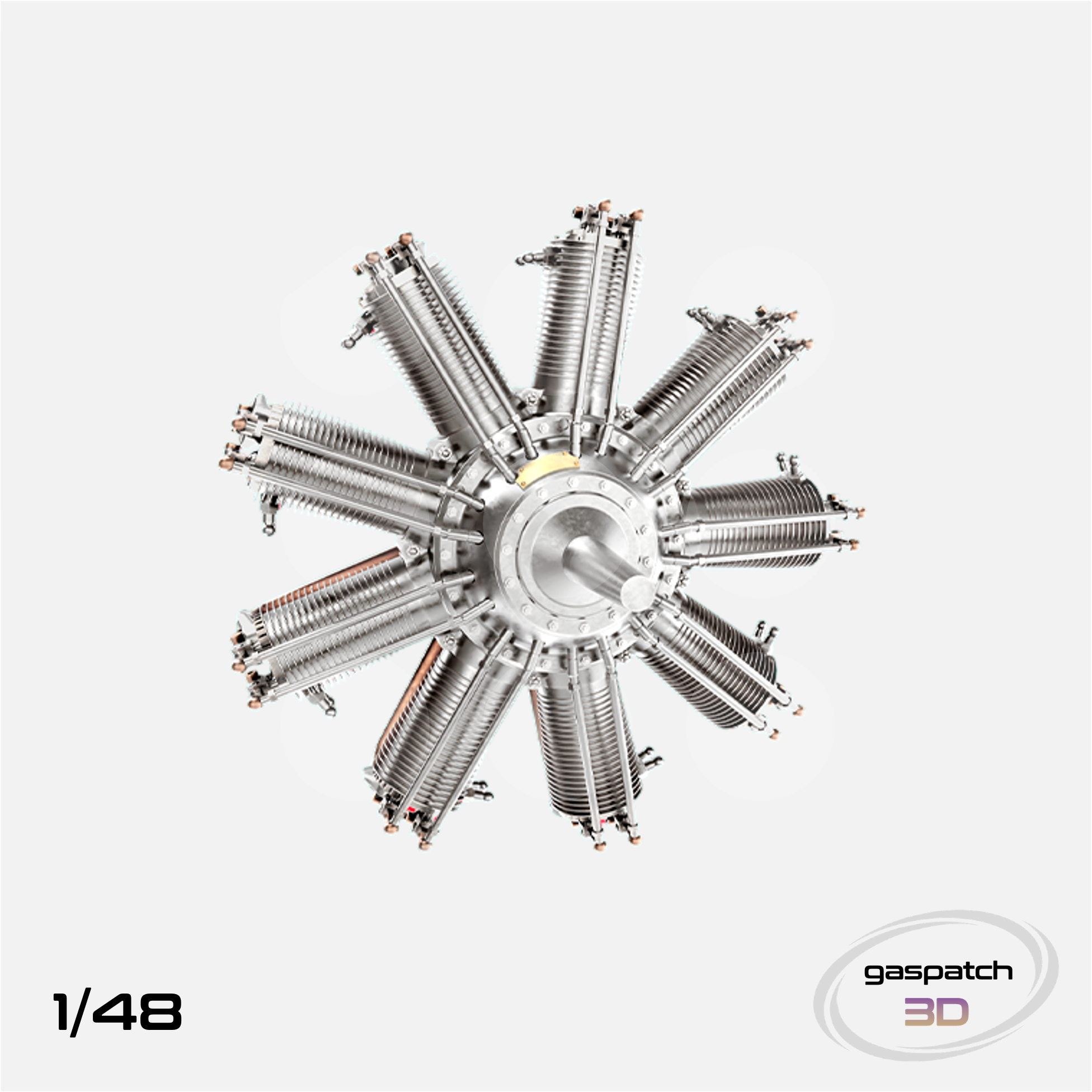
The Clerget 9BF is one of the most iconic rotary aircraft engines of the First World War, an engineering workhorse that helped define early aerial combat. Developed in France by Société Clerget-Blin, the 9BF powered many of the era’s legendary fighters and earned a reputation for reliability, smooth operation, and strong performance at altitude.
This nine-cylinder, air-cooled rotary engine produced approximately 140 horsepower, a notable output for its time. Unlike stationary radial engines, the entire engine rotated with the propeller, improving cooling and delivering rapid throttle response—an advantage prized by WWI pilots. The 9Bf featured refined carburetion and improved fuel efficiency over earlier models, making it easier to manage in combat and on long patrols.
Widely used in aircraft such as the Sopwith Camel, Sopwith Pup, and Nieuport fighters, the Clerget 9BF became synonymous with Allied air power during 1917–1918. Pilots appreciated its comparatively smooth running and predictable handling, while ground crews valued its straightforward maintenance and robust construction.